


R2R accounting is one of the most powerful finance tools that modern businesses use for gaining profits, improving performance, and gaining the competitive edge. The R2R process enables companies to leverage the data generated by finance and other transactions, for gaining deeper insights into process performances. The Record to Report (R2R) process is a critical financial management function in enterprises that encompasses a series of steps to collect, process, report and analyse financial data.

Policy and Approval Flows
Even an unintentional variance in financial reports may irreversibly damage a company’s brand image. Record to Report practices facilitate maintaining the highest level of transparency in reporting. During consolidation, it’s important to compile all relevant financial records and ensure that intercompany transactions are correctly accounted for. This comprehensive approach ensures that the consolidated financial statements reflect the true financial position of the Outsource Invoicing organization. Accurate financial records are crucial for maintaining transparency and ensuring that all financial activities are tracked. Effective use of ERP systems can further streamline the data collection process, allowing for seamless integration of financial data across various departments.
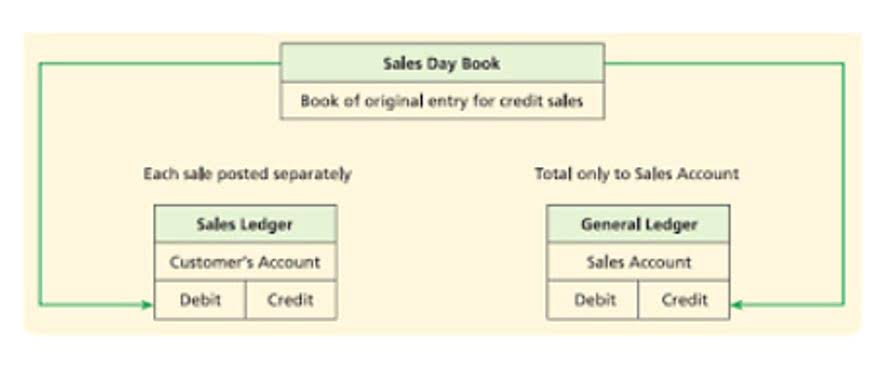
- A reconciliation account is a control account to perform the reconciliation between the sub-ledgers and the general ledger.
- Errors and omissions in logging of transactions may cause serious implications in reporting which in turn would not be desirable as far as the R2R is concerned.
- Additionally, communicate the benefits of the changes and address concerns to ensure the smooth adoption of processes.
- Shak Akhtar, General Manager of Finance Automation at Redwood Software, possesses extensive experience in finance and IT.
- Financial AnalysisInvolves a thorough examination of financial data to extract meaningful insights.
- The record to report (R2R process) concept has transformed how accounting departments manage financial procedures.
- The R2R process is an important part of the accounting process, as it helps to ensure that financial data is accurate and up-to-date.
Gia AI:Digital Finance Assistant
To that end, record to report meaning a software solution like PLANERGY provides powerful optimization tools that reduce frustration while maximizing efficiency and accuracy. Transitioning to the Oracle Record to Report (R2R) process is a significant step for any organization. While the benefits are promising, a successful implementation requires meticulous planning, careful execution, and thorough preparation. Here, we delve deeper into the key tips to ensure a smooth transition to the Oracle R2R process.
- A properly functioning R2R system promotes openness assurance and responsibility to the stakeholders, in turn, assuring them of the financial credibility of the organization.
- These steps help prepare comprehensive reports showing your organization’s financial performance.
- From recording daily transactions to preparing financial reports, R2R gives leaders the tools they need to make smart decisions, follow the rules, and plan for success.
- Maintaining compliance helps minimize the risk of reputational damage and legal issues.
- The cloud also offers scalability and eliminates the need for sizeable on-premises infrastructure investments.
- Implement integrated financial systems and automated workflows to reduce manual effort and improve process efficiency.
With ACDOCA in SAP S/4HANA

By connecting purchasing, reporting, and revenue data in a single source of truth, they give finance leaders instant insight into spending and cash flow. With this visibility, teams can model revenue scenarios, forecast with precision, and make faster, data-driven decisions that boost both profitability and resilience. Within the P2P–R2R–Q2C framework, Q2C serves as the business’s revenue engine, where value created through operations is returned as cash flow. While P2P governs how companies spend, and R2R ensures every transaction is recorded accurately, Q2C drives how organizations earn, bill, and collect.
- Learn how AI is detecting errors, reconciling accounts, and automating close like never before.
- Having a systematic process for gathering data and presenting it in standardized forms enables the business to comply with various regulations at both the federal and state levels.
- At last, the R2R process ends with compliance and the final closure of accounts.
- It is one of the steps in accounting and is often done during the month-end closure or reporting.
- The steps of the R2R process include collecting, recording, validating, maintaining ledgers, closing, consolidating, and finally, reporting.

Armed with the pricing information, the salesperson can next calculate the unit price, which they’ll present to the customer. Depending on the customer and their constraints and expectations, there may be some negotiation before both parties settle on a final price (if the customer still decides they want the product). Once the salesperson understands precisely what the customer needs, they’ll then determine how much the product will cost based on the pricing structure, including discounts and potential surcharges for specialized requests. Once all the proper data has been extracted, it will then need to be collected in a single system for review.

- Modern finance platforms can connect with other business systems like inventory, payroll, and sales.
- SAP S/4HANA is an intelligent ERP system of the new generation, which uses exclusively the HANA in-memory database developed by SAP.
- BlackLine automates reconciliations, journal entries, intercompany transactions, and financial close tracking using AI, workflows, and real-time dashboards.
- By implementing these record to report best practices in the process, organizations can significantly improve their financial operations, reduce errors, enhance transparency, and make more informed decisions.
- The Record-to-Report (R2R) process lies at the heart of any finance organization.
Establishing strong internal controls is a must for safeguarding financial data and ensuring compliance with regulations. Access controls must be established and control mechanisms must be regularly reviewed balance sheet and updated. Robust internal controls instill confidence in the reliability of financial information. Compliance – Listed companies and companies with business operations in multiple countries need to comply with regulatory guidelines across different jurisdictions. R2R practices help to maintain uniformity in financial reporting for legal and regulatory compliance.